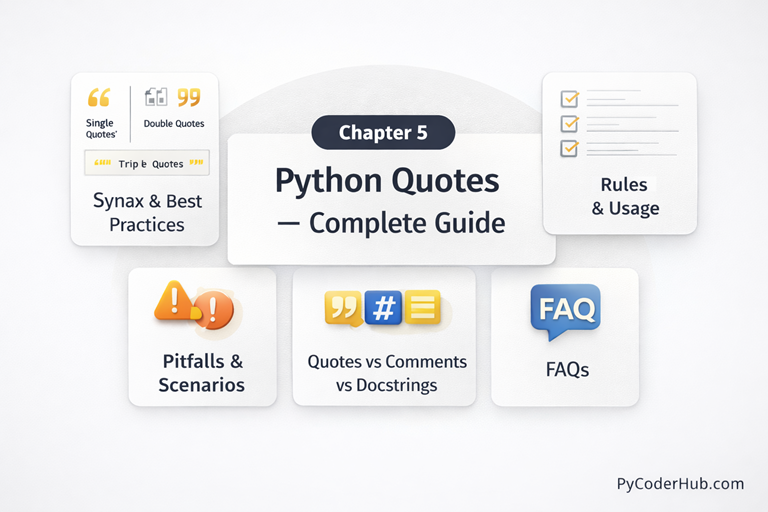
Chapter Overview
In this chapter, you’ll learn everything about Python quotes and how they are used to define text clearly and correctly in Python programs. You’ll understand what Python quotes are, why they are important, and how Python interprets single, double, and triple quotes in different situations. This chapter covers the types of quotes in Python, rules for using them, best practices for clean and readable code, common pitfalls and tricky scenarios, and the clear differences between quotes, comments, and docstrings. By the end of this chapter, you’ll be able to use Python quotes confidently and consistently, avoiding confusion and writing code that is easier to read, understand, and maintain.
What You Will Learn in This Chapter
In this chapter, you will learn:
- What Python quotes are and how they are used to define text in Python programs
- Why Python quotes are important for writing clear, readable, and error-free code
- The differences between single, double, and triple quotes in Python and when to use each
- The rules Python follows when interpreting quotes in different situations
- Best practices for using Python quotes consistently and effectively
- Common pitfalls and tricky scenarios that can cause confusion or errors when working with quotes
- The clear differences between quotes, comments, and docstrings in Python—and when each should be used
- Answers to common questions about Python quotes
This chapter will give you a strong, practical understanding of Python quotes—helping you write cleaner, more consistent, and more maintainable Python code with confidence.
Lessons in This Chapter
Below is a list of all the lessons included in this chapter. Click on any topic to dive into the full tutorial.
Lesson 1: Python Quotes Explained – Single, Double, and Triple Quotes with Best Practices
This lesson explains Python quotes and why they are important for defining text correctly in Python programs. You’ll learn the differences between single, double, and triple quotes and how Python interprets each type. It also covers best practices to help you use quotes clearly, consistently, and without confusion.
What You’ll Learn:
- Why Quotes Are Important in Python
- The Three Types of Quotes in Python
- Single Quotes in Python (‘ ‘)
- Double Quotes in Python (” “)
- Triple Quotes in Python (”’ ”’ or “”” “””)
- Comparison of Single, Double, and Triple Quotes in Python
- Common Mistakes With Quotes in Python (and How to Fix Them)
Lesson 2: Python Quotes Rules and Guidelines – A Complete Usage Handbook
Learn the essential rules and guidelines for using Python quotes correctly in your programs. This lesson explains when to use single, double, and triple quotes, how to follow consistent formatting practices, and how to avoid common quoting mistakes. By the end, you’ll understand how to apply Python quote rules properly to write clean, readable, and well-structured string literals.
What You’ll Learn:
- What Python Officially Says About Quote Rules
- Rule #1: Always Start and End a String with the Same Type of Quote
- Rule #2: Choose Single or Double Quotes Based on String Content
- Rule #3: Use Triple Quotes Only for Multi-line Text and Docstrings
- Rule #4: Understand How Quotes Behave in Raw Strings
- Rule #6: Use the Right Quote Type for Empty and Short Strings
Lesson 3: Python Quotes – Best Practices, Common Pitfalls, and Tricky Scenarios Explained
This lesson explores the best practices for using Python quotes effectively in real-world code. You’ll learn how to avoid common mistakes, handle tricky quoting situations, and choose the right type of quotes for different scenarios. By the end, you’ll be able to write cleaner, more consistent strings while preventing confusion and unexpected errors.
What You’ll Learn:
- Python Quotes Best Practices
- Common Pitfalls When Using Python Quotes
- Tricky Python Quote Scenarios Explained
Lesson 4: Quotes vs Comments vs Docstrings in Python – What’s the Difference and When to Use Each
This lesson clearly explains the difference between quotes, comments, and docstrings in Python. You’ll understand how each one is used, how Python interprets them, and when to choose the right option in different situations. By the end, you’ll avoid confusion and use each element correctly to write cleaner, more meaningful, and well-documented Python code.
What You’ll Learn:
- Why This Confusion Happens in Python
- What Python Actually Executes vs What It Completely Ignores
- Quotes in Python: What They Actually Do Behind the Scenes
- Python Comments: Text the Interpreter Completely Ignores
- Docstrings in Python: Strings That Actually Mean Something
Lesson 5: Python Quotes FAQ – Common Questions and Clear Answers
This lesson answers the most common questions about Python quotes in a simple and beginner-friendly way. You’ll find clear explanations about single vs double quotes, triple quotes, escaping characters, common errors, and best usage practices. By the end, you’ll have quick, practical answers that remove confusion and strengthen your understanding of Python quotes.
What’s Next After This Chapter
By completing this chapter, you now understand how Python quotes work and how they are used to represent text clearly and correctly in Python programs. You’ve learned the differences between single, double, and triple quotes, followed proper usage rules and guidelines, explored best practices, and avoided common mistakes that can cause confusion in string handling.
With this foundation in place, you’re ready to move on to Chapter 6: Python Indentation – Complete Guide. In the next chapter, the focus shifts to how Python structures code using indentation instead of curly braces. You’ll learn how indentation defines blocks of code, controls program flow, and affects readability and correctness. This will deepen your understanding of Python syntax and help you write clean, well-structured, and professional Python programs as you continue your learning journey.