Learn Python Keywords Best Practices with clear explanations and examples. Discover how to use keywords correctly, avoid common mistakes, and write cleaner, more readable Python code.
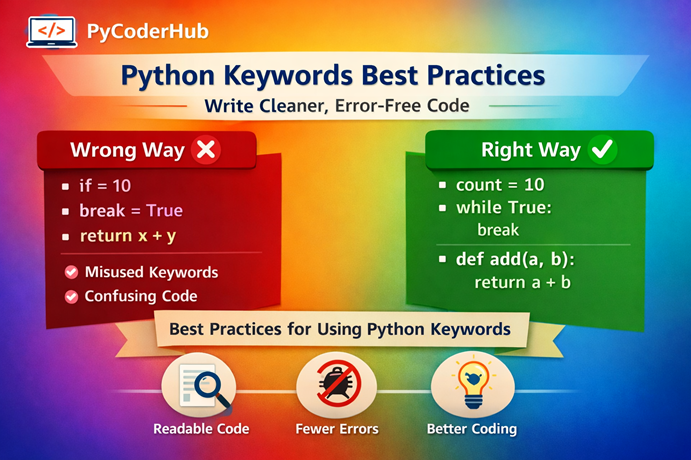
Learn Python Keywords Best Practices with clear explanations and examples. Discover how to use keywords correctly, avoid common mistakes, and write cleaner, more readable Python code.
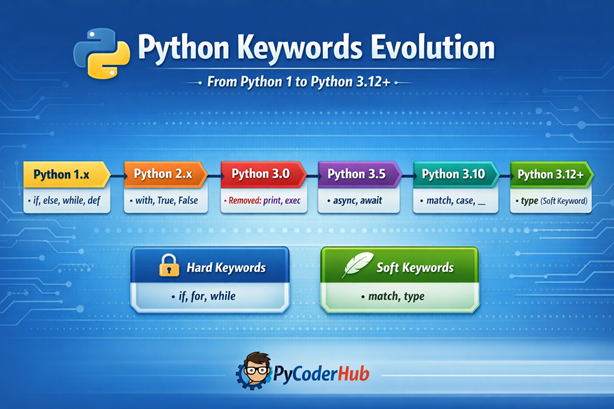
Explore Python Keywords Evolution from early Python versions to Python 3.12+. Understand how keywords changed over time, including additions, removals, and the introduction of soft keywords like match, case, and type.
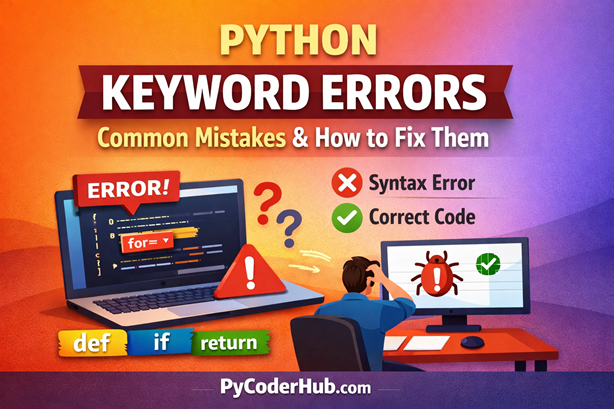
Python Keyword Errors are one of the most common issues beginners face. In this guide, you’ll learn the causes behind these errors, how to fix them, and practical ways to avoid them in real-world Python code.
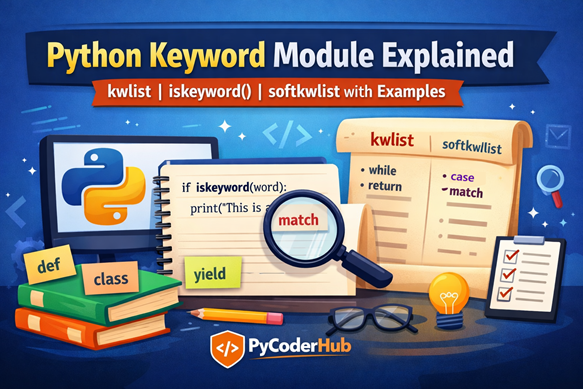
The Python Keyword Module allows you to programmatically check and list reserved and soft keywords in Python. In this guide, you’ll learn how to use kwlist, iskeyword(), and softkwlist with practical examples and real-world use cases.
Learn the essential Python keyword rules and guidelines. Understand how reserved and soft keywords behave, the restrictions they have, and the best practices for using them correctly in Python code.
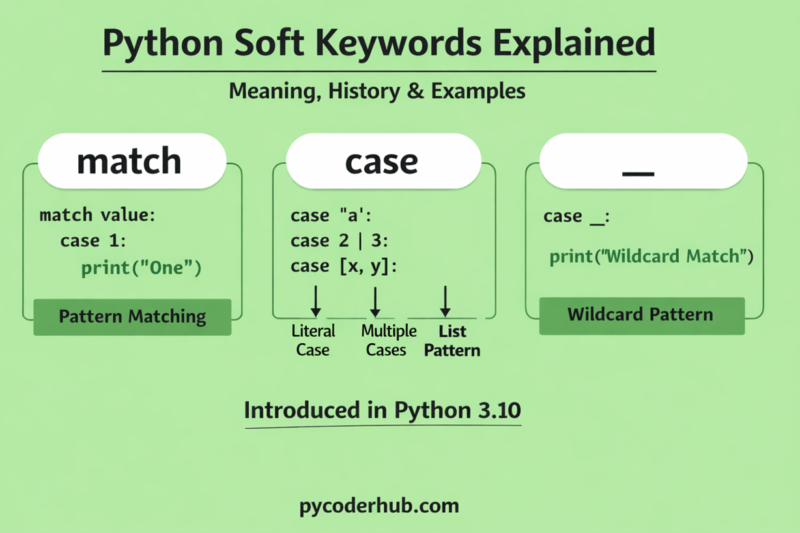
Python Soft Keywords are context-dependent keywords introduced in Python 3.10 to support structural pattern matching without breaking existing code. In this guide, learn the meaning, history, list, and practical examples of Python soft keywords like match, case, and _, and understand how they differ from traditional reserved keywords.
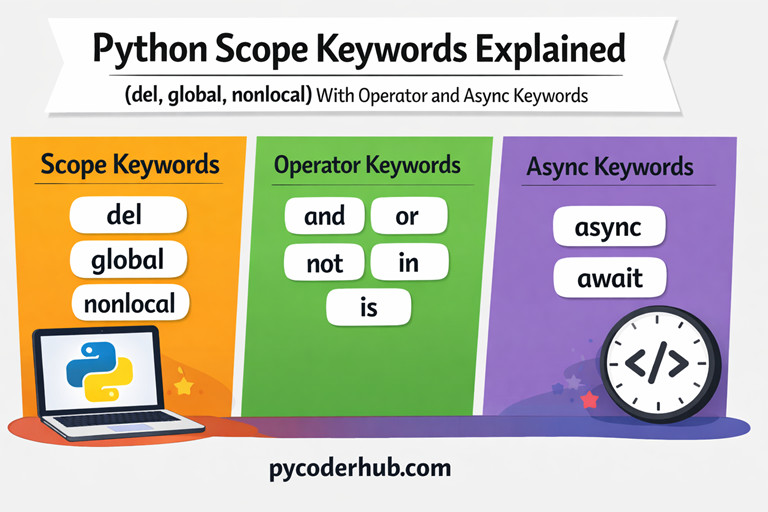
Python scope keywords control how variables behave inside functions and nested scopes. In this guide, you’ll learn how del, global, and nonlocal work, along with important operator keywords and modern async programming keywords in Python.
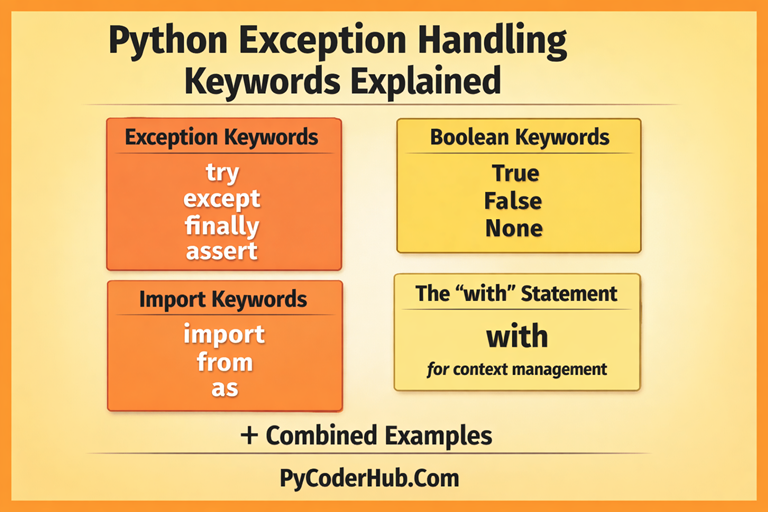
Python uses several special keywords to manage errors and program behavior. In this guide, you will learn Python Exception Handling Keywords like try, except, finally, and assert, along with Boolean keywords (True, False, None) and import-related keywords (import, from, as). Practical examples show how these keyword types work together in real Python programs.
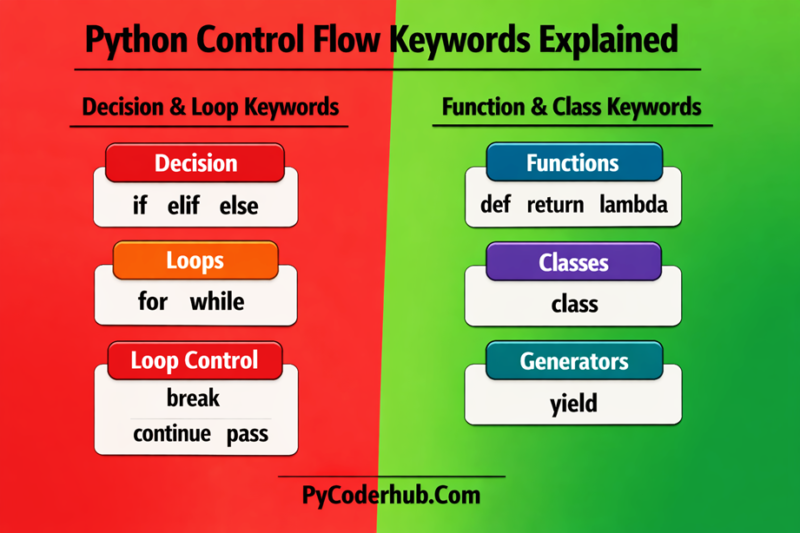
Python Control Flow Keywords help control how a Python program runs. In this lesson, you’ll learn how decision keywords, loops, function keywords, and class-related keywords work together with clear examples.
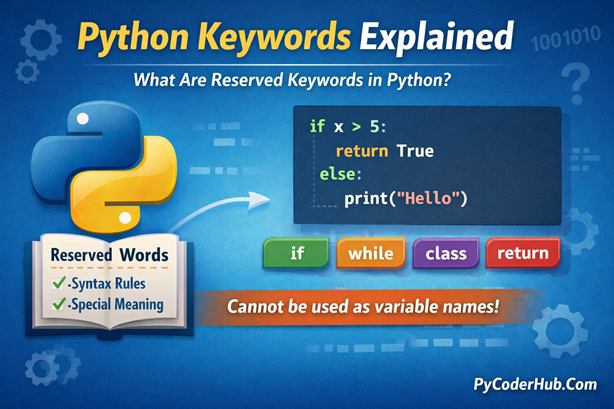
Python Keywords Explained in simple terms. Understand what reserved keywords are, how they work in Python syntax, how they differ from identifiers and built-in functions, and how to check them using the keyword module.