In this lesson, we explore Python Escape Sequences Best Practices in detail. You’ll learn how to write cleaner strings, avoid confusion, prevent hidden bugs, and follow professional techniques for handling escape sequences correctly in real-world Python code.
Chapter 7
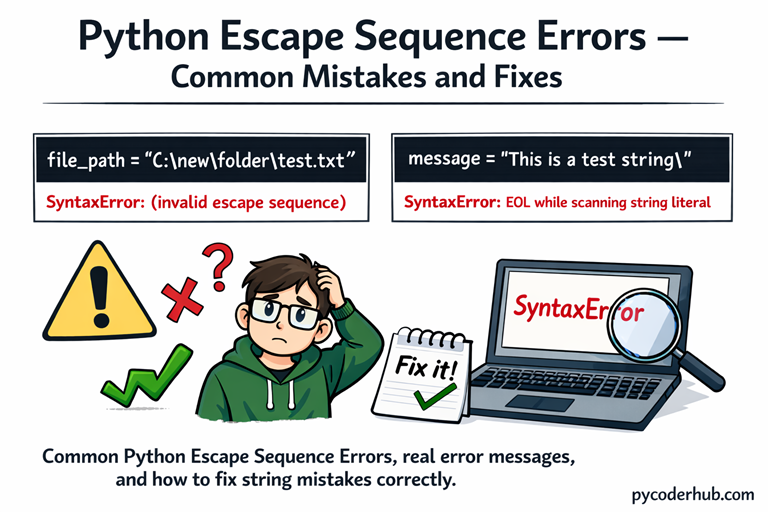
Python Escape Sequence Errors: Common Mistakes, Error Messages & How to Fix Them
Python Escape Sequence Errors are one of the most common causes of string-related confusion in Python. In this lesson, you’ll learn the typical mistakes developers make, the error messages Python shows, and how to fix and avoid them with confidence.
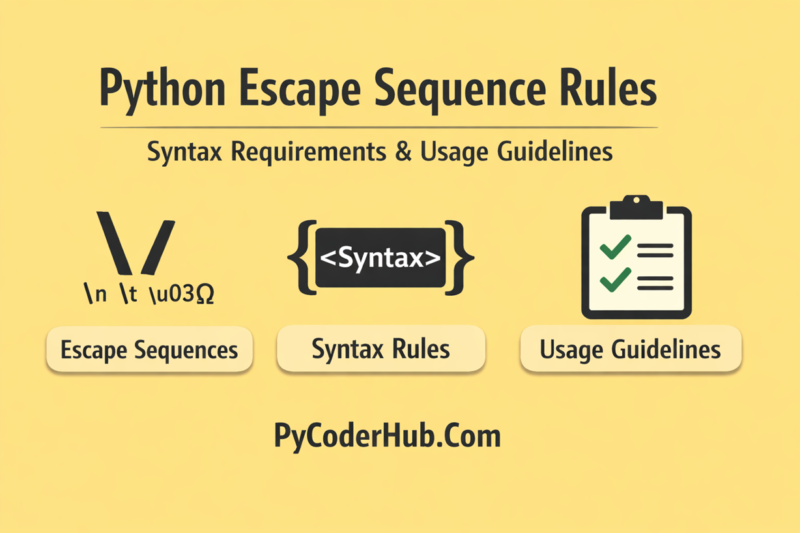
Python Escape Sequence Rules: Syntax Requirements and Usage Guidelines
This lesson explains Python Escape Sequence Rules, covering official syntax requirements and usage guidelines defined by the Python language. You’ll understand how escape sequences are interpreted, what rules must be followed, and how string behavior changes when escape characters are used.
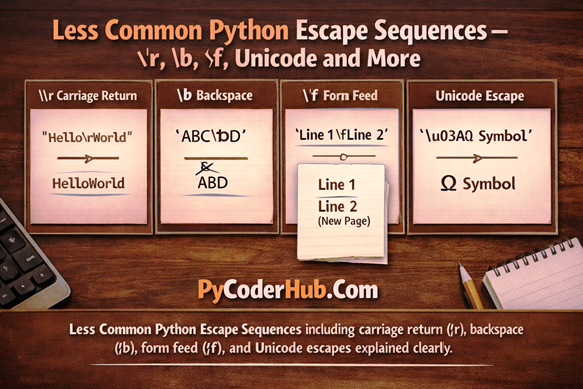
Less Common Python Escape Sequences: \r, \b, \f, Unicode and More
In this lesson, we explore Less Common Python Escape Sequences such as \r, \b, \f, Unicode escapes, and other rarely used sequences. You’ll understand how they behave inside strings, where they are useful, and why some are considered outdated or less popular in modern Python development.
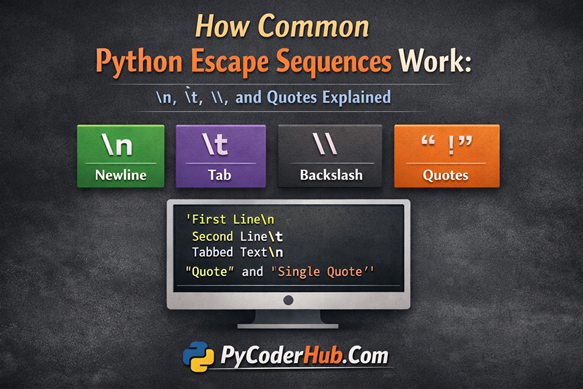
How Common Python Escape Sequences Work: \n, \t, \, and Quotes Explained
This lesson explains how common Python escape sequences work, including newline (\n), tab (\t), backslash (\), and quote characters. You’ll learn how Python interprets them inside strings and why they behave differently from normal characters.
Python Escape Sequences Explained: Meaning, Purpose, and How They Work
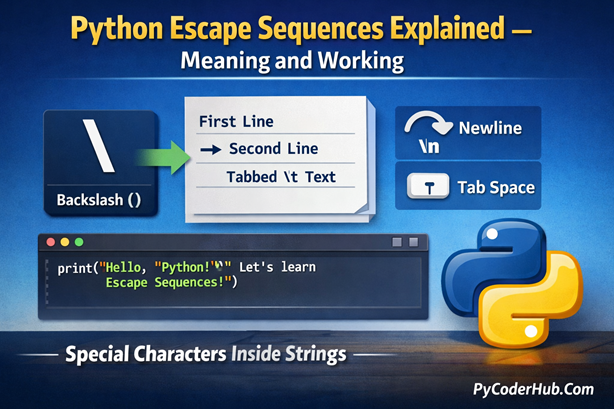
Python Escape Sequences allow special characters like newline, tab, and backslash to be used inside strings. In this lesson, you will clearly understand what escape sequences are, why they are needed, how they differ from escape characters, and how Python interprets them internally.